
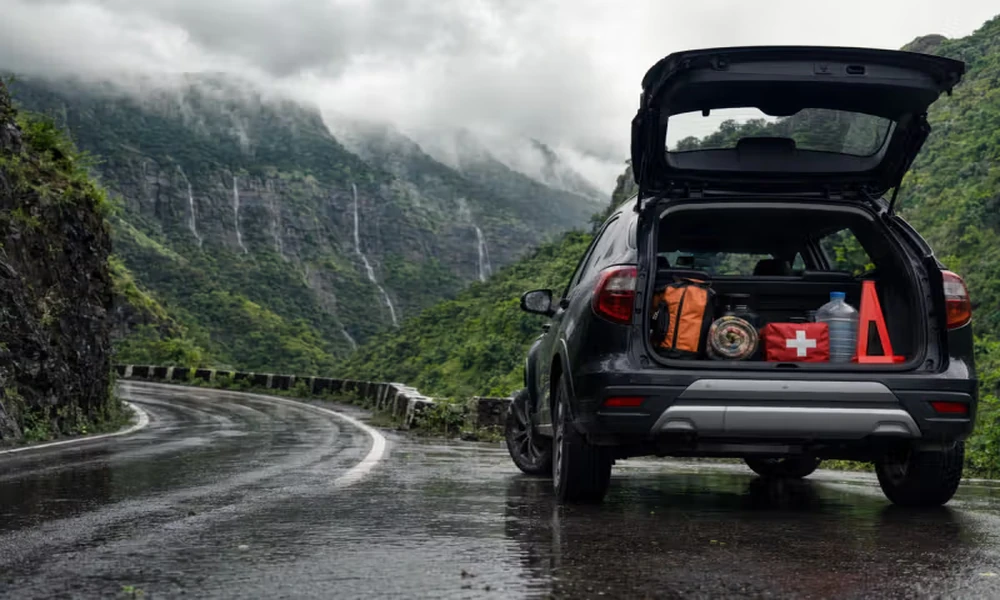

A vehicle breakdown is inconvenient anywhere, but when it happens on a major route during heavy rain, the situation can become dangerous within minutes. Reduced visibility, slippery road surfaces, standing water, and fast-moving traffic all increase the risk for drivers and passengers waiting for roadside emergency assistance.
If you have already arranged for a reliable Slide Car Service in Bangkok or a local flatbed carrier like Slide Car Service Lam Luk Ka, your immediate priority should not be trying to perform roadside repairs. Instead, focus on keeping yourself and your passengers safe, remaining clearly visible to oncoming traffic, monitoring changing weather conditions, and preparing your vehicle for a smooth and secure recovery process.
Move the Vehicle Away From Traffic If It Is Safe to Do So
If the vehicle can still move, steer it as far away from active traffic as possible. A petrol station, service road, parking area, or sufficiently wide shoulder is generally safer than remaining in a live traffic lane.
Turn on your hazard lights immediately. During heavy rain, however, remember that other drivers may have limited visibility, so flashing lights alone should not be treated as complete protection. If the engine has stopped completely or the vehicle cannot be moved safely, avoid trying to push it while traffic is passing nearby. Personal safety should always take priority over moving the car a few extra metres.
Decide Whether Staying Inside or Leaving the Car Is Safer
There is no single rule that applies to every roadside emergency. The safest decision depends on where the vehicle has stopped and what is happening around it.
If the car is well away from moving traffic and there is no immediate risk from rising water, staying inside with seat belts fastened may be safer than standing on a wet roadside. However, if the vehicle is stopped in a dangerous lane and there is a clearly accessible safe area away from traffic, occupants should move there carefully. Never stand directly behind, in front of, or on the traffic-facing side of a disabled vehicle, as wet roads significantly increase stopping distances for approaching drivers.
Monitor Rising Water While Waiting for Assistance
Heavy downpours create another problem that is easy to overlook: water levels can change rapidly while you wait for assistance.
If water begins to rise around your tires, assess whether the location itself is becoming unsafe. Floodwater may hide potholes, open drains, road edges, or uneven surfaces that could make recovery more difficult. Avoid driving through deeper water simply to reach a more convenient pickup location. If the water level changes quickly, inform your recovery operator so they can evaluate whether the original pickup point remains suitable.
Stay Visible Without Putting Yourself in Harm’s Way
Visibility is crucial during heavy rain, at night, or on sections of road with limited street lighting. Keep the vehicle’s hazard lights on as long as the electrical system functions properly.
A warning triangle or emergency light can help approaching drivers notice your vehicle earlier, but only place one if you can do so safely without walking into active traffic lanes. Avoid standing near the road to signal the operator manually; sharing an accurate location by phone is far safer than exposing yourself to passing vehicles in poor visibility.
Share an Accurate Location and Vehicle Details
A common reason roadside assistance takes longer than necessary is an unclear pickup location. Providing only a general road name may not be enough on long routes with multiple intersections, access roads, and similar landmarks.
Send a live GPS location or map pin whenever possible, and mention nearby landmarks such as petrol stations, bridges, or shopping hubs. When requesting assistance, specify your direction of travel and which side of the road the vehicle is on so the operator can approach safely.
Additionally, explain what happened before the vehicle stopped-such as whether the engine stalled after driving through water, a tyre failed, or the steering locked-and mention if your car is an EV, SUV, or low-clearance model so the right equipment can be dispatched.
Avoid Risky Roadside Repairs and Prepare for Recovery
A breakdown can tempt drivers to open the bonnet or inspect underneath the car, but on a wet roadside, these actions expose you to passing traffic and slippery conditions. Unless the vehicle is in a protected area, avoid carrying out manual repairs.
Before the flatbed carrier arrives, ensure the car keys are easily accessible, retrieve important personal belongings, and take a few quick photos of the vehicle’s condition for your records. Inform the driver if the parking brake cannot be released or if the wheels are locked. Once the recovery team arrives, follow their instructions and stay clear of the loading platform and cables.
Conclusion
A late-night breakdown during heavy rain should always be handled as a safety situation before a vehicle repair problem. Moving away from active lanes, staying visible, monitoring water levels, and sharing precise details can dramatically reduce risk while waiting for help.
When unexpected vehicle trouble strikes, รถยกรถสไลด์เฉพาะกิจ provides reliable towing and flatbed transport for breakdowns, accidents, and disabled vehicles. Operating 24/7 with a strong focus on safe loading and damage-free transit, their service covers multiple key zones across Bangkok and surrounding areas-including fast-response Slide Car Service Lam Luk Ka (รถสไลด์ลำลูกกา) coverage-ensuring your vehicle is handled with professional care every step of the way.


