

Quick overview
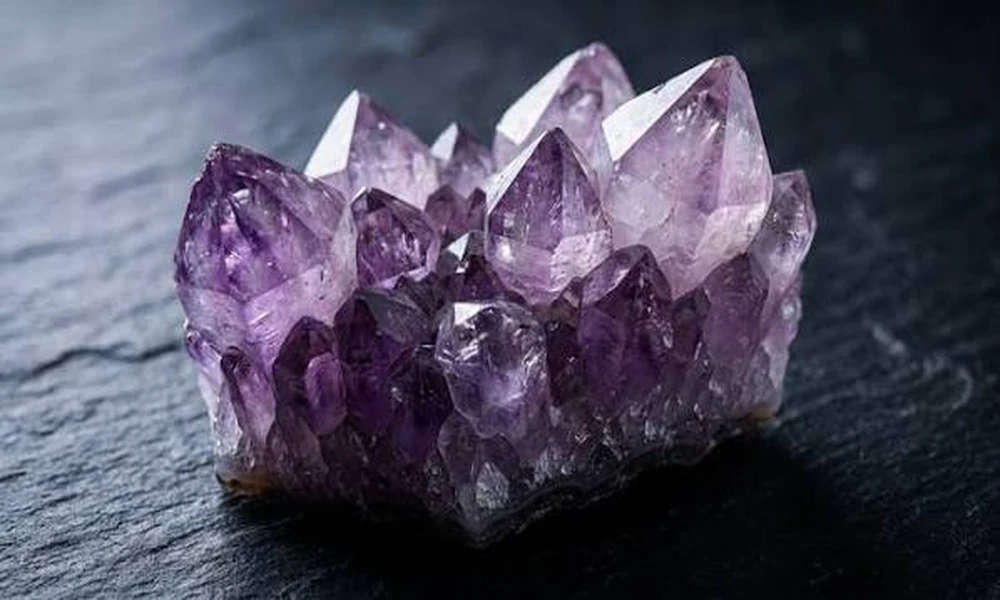
The amethyst crystal is a purple variety of quartz, coloured by traces of iron and natural radiation. Long tied to sobriety, wisdom and spiritual protection, it connects with the third eye and crown chakras. Many people reach for it to feel calmer, sleep better and think more clearly.
What is the amethyst crystal, and why has it mattered for so long?
Amethyst is the purple form of quartz, named by the ancient Greeks and valued across cultures for protection, clarity and a clear head.
The name comes from the Greek word amethystos, which loosely means “not intoxicated.” Greeks and Romans carved drinking cups from it and believed the stone kept wine from clouding the mind. That old link between amethyst and a sober, steady spirit never really faded.
Over the centuries the stone travelled from myth into royalty and religion. It appeared in the regalia of kings and queens and in the rings of bishops, where its purple stood for wisdom and devotion. For most of history purple was a rare and costly colour, so amethyst carried a sense of status alongside its spiritual meaning. When you hold a piece today, you are holding a stone people have trusted for calm and clarity for a very long time.
What gives amethyst its purple colour?
Amethyst turns purple when trace iron inside the quartz is changed by natural radiation, creating colour centres that produce shades from soft lilac to deep violet.
Plain quartz is clear. Amethyst forms when tiny amounts of iron slip into the crystal structure as it grows. Iron on its own does not make purple. The colour appears only after natural radiation from surrounding rocks nudges those iron ions to release an electron, forming what geologists call colour centres.
These colour centres absorb light in the yellow to green part of the spectrum, so what reaches your eye is purple. The exact shade depends on how much iron is present and how much radiation the crystal met over time. Strong heat can change amethyst too. Warm it enough and the purple shifts toward the golden tones of citrine, which is why some citrine on the market began life as amethyst.
Where is amethyst found?
Most amethyst on the market comes from Brazil and Uruguay, with important deposits in Zambia, Madagascar and Russia, and smaller amounts from India.
Brazil is the largest source by far, with huge deposits in states like Rio Grande do Sul, Bahia and Minas Gerais. Much of the amethyst you see, from small tumbled stones to tall geodes, traces back here. Uruguay sits close behind and is known for darker, richer stones, usually in smaller crystals prized for their deep colour.
Africa adds its own character. Zambia produces intense, saturated purples that collectors watch for, while Madagascar contributes steady supply. Russia has a long history with amethyst, and India appears among the smaller producers. Because sources vary so much, two amethysts can look quite different in tone and still be the real stone.
Amethyst key facts at a glance
Amethyst is a variety of quartz with a hardness of 7, a February birthstone linked to the crown and third eye chakras.
| Attribute | Detail |
|---|---|
| Mineral family | Quartz (silicon dioxide) |
| Colour | Pale lilac to deep violet |
| Colour cause | Trace iron plus natural irradiation |
| Mohs hardness | 7 |
| Main sources | Brazil, Uruguay, Zambia, Madagascar, Russia, India |
| Primary chakra | Crown |
| Secondary chakra | Third eye |
| Birthstone | February |
| Zodiac links (traditional) | Pisces, Aquarius |
| Common forms | Points, clusters, geodes, tumbled stones, bracelets |
Which chakras does amethyst work with?
Amethyst is mainly linked to the crown chakra at the top of the head and the third eye chakra between the brows, both tied to awareness and intuition.
The crown chakra sits at the very top of the head. In traditional teaching it governs your sense of connection, perspective and inner quiet. When it feels balanced, you tend to feel grounded yet open. When it feels blocked, people describe restlessness, mental noise or a sense of being cut off from the bigger picture.
The third eye chakra rests between the eyebrows and is associated with insight, focus and imagination. A steady third eye is linked with clear thinking and trust in your own judgement, while an unsettled one is often described through scattered attention or self doubt. Amethyst is believed to support both centres, which is why it shows up so often in meditation and calm-focused practice.
What is amethyst believed to do for you?
In crystal tradition, amethyst is believed to calm the mind, ease stress, support sleep and sharpen intuition. These are spiritual and experiential associations, not medical claims.
- Calmer mind: Amethyst is traditionally used to quiet mental chatter and take the edge off a stressful day.
- Better rest: Many people keep it near the bed because it is associated with easier, more settled sleep.
- Emotional balance: It is often reached for during change or overwhelm, as a reminder to steady yourself.
- Sharper focus: The third eye link ties amethyst to clearer thinking and staying present.
- Spiritual protection: Across cultures it has stood for a kind of gentle energetic shield.
- Deeper meditation: Its association with the crown chakra makes it a favourite meditation companion.
- Self worth: It is believed to support confidence and a kinder inner voice.
How do you use amethyst in meditation and everyday life?
You can meditate with amethyst in hand, keep it by your bed, wear it as jewellery, or place it in spaces where you want a calmer mood.
For meditation, sit somewhere quiet and hold a piece in your left hand. Breathe slowly and picture a soft violet light settling your thoughts. There is no strict rule here. The point is to slow down and let the stone become a simple anchor for attention.
Around the home, small placements go a long way. Try these easy options:
| Where | How to use it |
|---|---|
| By the bed | Keep a tumbled stone on the nightstand or under the pillow for restful nights. |
| On your desk | Place a cluster nearby to steady focus during busy or stressful work. |
| On your body | Wear an amethyst bracelet or pendant so its energy stays with you through the day. |
| In a room | Set a geode in a shared space as a calm, grounding centrepiece. |
If you like wearing crystals, an amethyst bracelet is one of the easiest ways to keep the stone close without thinking about it.
How do you cleanse and recharge amethyst?
Cleanse amethyst gently with running water, sound, smoke or moonlight, and avoid long spells in strong sunlight, which can fade the colour.
Amethyst is a 7 on the Mohs scale, so it handles everyday wear well, but its colour is sensitive to light. Keep these simple steps in mind:
- Rinse briefly under cool running water, then pat dry.
- Pass it through incense or dhoop smoke, or use a singing bowl or temple bell for a sound cleanse.
- Rest it overnight in gentle moonlight to recharge.
- Avoid leaving it on a sunny windowsill for hours, since prolonged sun can soften the purple over time.
How often you cleanse is up to you. Many people do it after a heavy week or whenever the stone feels like it needs a reset.
Is amethyst a birthstone, and who is it for?
Amethyst is the traditional birthstone for February and is often linked with Pisces and Aquarius, though anyone drawn to calm and clarity can use it.
If you were born in February, amethyst is your birthstone, which makes it a thoughtful and personal gift. In astrology it is commonly tied to Pisces and Aquarius, signs associated with intuition and independent thinking. You do not need a particular birthday or sign to enjoy it though. People reach for amethyst when they want a gentle reminder to slow down, whether that is a student before exams, a parent after a long day, or anyone building a quiet meditation habit.
Frequently asked questions about amethyst
Is amethyst a real crystal or is it dyed?
Natural amethyst is a genuine purple variety of quartz coloured by iron and radiation, not dye. Some cheaper stones on the market are dyed or lab-grown, so buy from sellers who describe the source clearly.
Can amethyst get wet?
Yes, brief contact with water is fine and short rinses are a common way to cleanse it. Avoid soaking it for long periods or using hot water, and dry it afterwards.
Does amethyst fade in sunlight?
It can. Long exposure to strong sun may gradually lighten the purple, so it is better to charge amethyst in moonlight and store it away from harsh, direct light.
Where should I keep amethyst for better sleep?
Many people place a tumbled stone on the bedside table or under the pillow. Wearing an amethyst bracelet in the evening is another gentle option.
What is the difference between amethyst and citrine?
Both are quartz. Amethyst is purple from iron and radiation, while citrine is golden. Heat can turn amethyst into citrine, which is why the two are often sold together as ametrine.
Can I wear amethyst every day?
Yes. With a hardness of 7 it holds up well to daily wear. Just cleanse it now and then and keep it out of prolonged direct sun to protect the colour.
Disclaimer
Amethyst and other crystals are tools for reflection, intention and calm. Their benefits are based on tradition and personal experience, not on medical evidence. If you are dealing with anxiety, sleep problems or any health concern, please speak with a qualified doctor or therapist, and treat crystals as a companion to that care rather than a replacement for it.
Amethyst rewards curiosity, so let yourself explore what it means to you. To learn more about crystals and how to choose the right one, take a look at www.ankastra.com


