
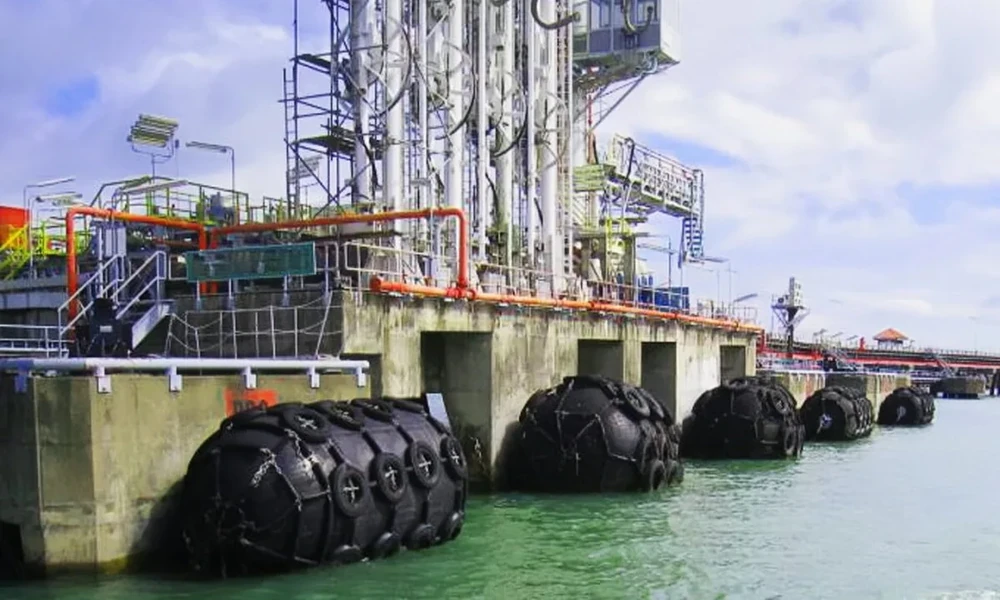

A loaded tanker drifting towards a jetty at a fraction of a knot looks harmless from the shore. Yet a vessel of that size carries enormous momentum, and even a gentle nudge against concrete can dent hull plating, crack a quay face or snap a mooring line. Large ship fenders sit in that gap, soaking up the energy of the approach before steel meets steel or concrete.
Among the many fender designs in use, one of the simplest is also one of the most widely trusted: a tough rubber body filled with compressed air. The pneumatic rubber fender floats, moves with the tide and spreads its load over a wide patch of hull. Knowing how it works, which version suits which job and how to look after it helps crews and buyers decide well.
Why Does Compressed Air Make Such a Good Cushion Between Two Hulls?
Picture squeezing a football between your palms. The first push is easy, the ball resists harder the more you press, and when you let go it springs back. A pneumatic fender behaves in much the same way. As a ship closes in, the fender flattens, the air inside is compressed, and the approach energy is absorbed gradually.
The real advantage is a low reaction force. A solid rubber block can absorb energy too, but it tends to push back sharply once it is squeezed hard. Air gives a gentler curve, so the force passed into the hull stays moderate even when the fender is heavily compressed. Tankers and gas carriers value this, as their side shells dislike sharp, concentrated loads.
Floating also solves a practical headache. The fender rises and falls with the tide and with the ship as it loads or discharges cargo, so the contact point stays in roughly the same place on the hull.
Which Standard Covers Floating Pneumatic Rubber Fenders?
Most floating pneumatic rubber fenders in commercial service are built to ISO 17357-1, the international standard for high-pressure floating pneumatic fenders. The standard describes the layered construction (an outer rubber cover, reinforcing layers of synthetic tyre cord and an inner rubber lining), along with material tests, dimensions and performance values.
ISO 17357-1 sets two initial internal pressures, 50 kPa and 80 kPa. At the same size, the higher pressure absorbs more energy but also pushes back with more force, so the choice depends on the vessel, its berthing speed and how much load its hull can comfortably take. Either way, size and pressure should come from a proper berthing energy calculation for the ships expected.
Pneumatic Fender with CTN or Sling Type: What Separates the Two?
A bare rubber body can get scuffed by rough quay walls, barnacles or sharp steel edges, so many units wear a protective net. A pneumatic fender with CTN, short for chain and tyre net, wears a net of chain or wire rope with used truck or aircraft tyres fixed along it. The tyres take the rubbing, the chains provide strong points for lifting and towing, and rubber sleeves over the chain help keep it off painted hulls.
A sling-type pneumatic fender does without the net. It relies on a tougher reinforced outer cover and is lifted by slings or fittings at the ends. It is lighter, cheaper to handle and quicker to deploy, which suits smaller fenders and calmer, cleaner berths.
The choice usually comes down to how rough the contact surface is, how often the fender will be moved and how much handling gear is available.
How Are Large Ship Fenders Rigged for STS Transfers?
Ship-to-ship (STS) transfers involve two vessels moored side by side at anchor or under way in sheltered water while crude oil, LPG or another cargo is pumped across. Before the second ship comes alongside, a line of primary fenders is strung along the side of one vessel. Smaller secondary fenders are often placed near the bow and stern in case the ships roll towards each other at the ends.
During the transfer, the two hulls are never truly still. Swell, wind and the changing draught of both ships as cargo moves keep the large ship fenders working for hours, sometimes days.
Rigging a fender offshore is a very different job from placing one at a quay. There is no shore crane, so crews depend on the ship’s own lifting gear or a support craft. Industry guidance on STS operations covers fender layout, weather limits and mooring plans, and experienced operators follow it closely.
Where Does a Hydro-Pneumatic Fender Fit In?
Submarines pose an unusual problem. Most of the hull sits below the water, and the part above is curved and narrow, so a standard floating fender would touch only the very top of the boat. A hydro pneumatic fender solves this by being partly filled with water and then topped up with compressed air. A weight hung beneath it keeps it upright, and much of the body sits below the surface.
That lower, vertical position means the fender meets a submarine near its widest point. The water adds mass and stability, while the air still provides the soft, low-force cushioning. Naval berths use these fenders most, though some specialist offshore applications with low contact points rely on them too.
What Should a Routine Fender Inspection Cover?
Air-filled fenders are simple, but they do not look after themselves. Many operators check them every few months and again before every transfer.
- Internal pressure: read it with a gauge, remembering that air temperature can shift the reading noticeably between seasons.
- Valves: check the inflation valve seals and, on larger units, that the safety valve can release air under over-compression.
- Rubber body: look for cuts, bulges, cracks or exposed cord, which may call for repair or retirement.
- Net and tyres: check for corroded links, missing tyres, worn sleeves and loose shackles.
Storage matters as much as inspection. A pneumatic rubber fender left in strong sunlight, near oil spills or under heavy objects ages faster than one kept shaded and clean. A sling-type pneumatic fender, with no net to share the wear, deserves extra attention to its outer cover during each check.
Can a Well-Maintained Air-Filled Fender Stay in Service for Years?
Yes, a pneumatic fender that is inflated to its correct pressure, inspected regularly and stored with care can give many years of dependable service. Keeping simple records of pressure readings, repairs and net replacements helps owners spot problems early. For anyone responsible for large ship fenders at a berth or during STS work, that steady routine is what keeps hulls, quays and cargo safe.
Conclusion: Choosing the Right Fender for Reliable Marine Protection
Pneumatic rubber fenders play an important role in protecting vessels, port infrastructure and cargo during berthing and ship-to-ship transfers. Their ability to absorb impact energy, maintain low reaction forces and adapt to changing water levels makes them a reliable choice for demanding marine operations. Selecting the right fender type, ensuring proper installation and following regular inspection practices can improve safety and extend service life. For ports, ship operators and offshore facilities, investing in high-quality large boat fenders helps reduce collision risks, minimise structural damage and ensure safer marine operations.


